Sewage Cleanup in Boston, MA
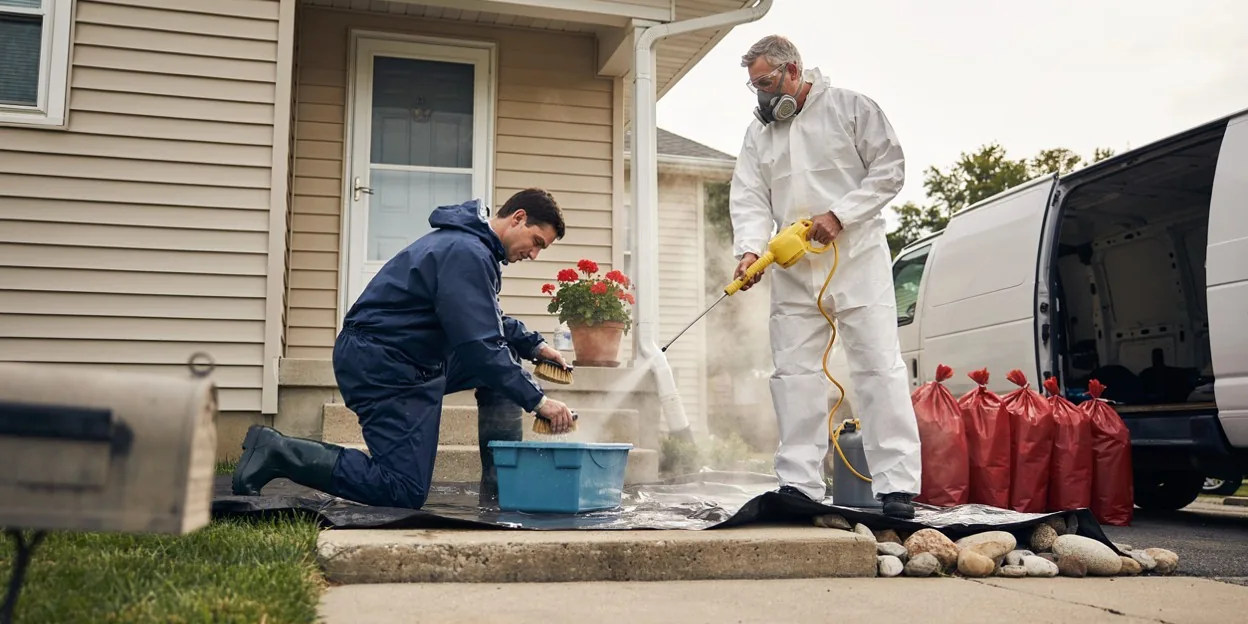
It rained two inches before dinner, and when you went down for the laundry, the floor drain had turned into a fountain. Now there is gray water with a smell you recognize across the basement floor and up the first step. Call us now and tell us what you see. An independent local provider who does sewage cleanup in Boston and the inner-ring cities takes it from there.
What the crew does first
Sewage is Category 3 water and is handled differently from a clean pipe break. The crew arrives in protective gear, seals the affected area off from the rest of the house with plastic sheeting, and sets up air scrubbers with HEPA filters. Then they extract the standing water and bag it out through a path that does not cross the clean rooms.
Next they remove what cannot be cleaned. Carpet, pad, the bottom of finished walls, and anything porous the water touched come out and are bagged. Concrete, stone, and tile are cleaned, then disinfected, then dried with air movers and dehumidifiers. A meter check comes before anything is rebuilt.
What to do in the next hour
Stop using water in the house. Every flush, shower, and load of laundry sends more water to a line that is already full or blocked. In a multi-family building, tell the other units. Keep children and pets out of the basement and close the door at the top of the stairs.
Do not mop it or run a household wet vacuum. If sewage touched something you want to keep, leave it where it is rather than carrying it through the house. Take photos from the stairs. Then call a plumber for the blockage and call us for the cleanup. Those are two different jobs, and the second one cannot finish until the first is done.
What is usually saved and what is not
Porous material that soaked up sewage does not come back. Carpet, pad, cardboard, particleboard, upholstered furniture, mattresses, and the wet portion of drywall or paneling are removed. Paper records that sat in it are usually gone.
Concrete, fieldstone, brick, metal, tile, and solid plastic can be cleaned and disinfected. Solid wood that only got splashed can often be saved. Ask the crew what they are removing and why, and photograph it before it goes. Once the contaminated material is out, the rest of the job is structural drying, and a stone cellar takes longer than a slab.
Suffolk County notes: combined sewers and cast-iron stacks
Boston, Cambridge, Somerville, and Chelsea still carry rainwater and sewage together in the same pipes across most of the older street grid. In a heavy storm those lines fill, and the water looks for the lowest opening, which is a floor drain, a basement toilet, or a laundry sink on a low street. Neighborhoods on filled land or in old streambeds, parts of Dorchester, Roxbury, East Boston, and East Cambridge, see it most. A backflow valve on the house sewer line is the fix for next time, and a plumber installs it.
The other Boston source is inside the house. Cast-iron drain stacks and clay laterals from the 1890s crack at the joints, roots find the openings, and the line backs up into a first-floor bathroom or the basement. Snowmelt after a heavy winter loads the system the same way rain does. If street water came in with the sewage, the job overlaps with basement flooding cleanup.
The lateral from the house to the street is the owner's responsibility in Boston and most inner-ring cities, and a blockage in the public main is reported to the city's water and sewer department. Many policies do not include sewer backup unless a rider was added, so check yours. Ask the crew to document the source and the water category for your adjuster.
Calling about sewage cleanup
Say which drain backed up, which rooms got wet, whether the water is still rising, and whether a plumber has cleared the line yet. Mention a finished basement, a furnace or panel in the water, and whether other units in the building are affected. Call (857) 524-9927 now and tell us what you see.